Across the logistics corridors, manufacturing supply networks, and heavy equipment distribution zones of Fort Wayne, Allen County, and Northeast Indiana—from the industrial hubs along Coliseum Boulevard, Meyer Road, and Ardmore Avenue to regional equipment branches in New Haven, Auburn, and Columbia City—commercial material handling dealerships and forklift service depots serve as the backbone of modern warehousing. These facilities house complex machinery fleets: 3,000-lb to 15,000-lb cushion and pneumatic tire internal combustion (LPG/diesel) forklifts, high-reach electric order pickers, narrow-aisle reach trucks, 36-volt and 48-volt multi-cell industrial lead-acid and lithium battery charging banks, 3-stage hydraulic mast assemblies, solid polyurethane press-on tire presses, commercial pressure-washing wash bays with oil-water separator interceptors, and high-bay cantilever racking holding obsolete carriage attachments (side-shifters, rotators, roll clamps, and carpet poles). However, when equipment dealerships consolidate territories, migrate to new corporate campuses, or forfeit leased industrial real estate under triple-net (NNN) commercial lease terms, decommissioning a material handling facility requires specialized rigging, environmental hazardous fluid handling, and heavy structural dismantling. Multi-ton counterweights must be unbolted and loaded; sulfuric acid battery electrolyte spills must be neutralized under IDEM guidelines; and heavy mast hydraulics must be depressurized without spraying toxic fluids across shop floors. Junk Harbor delivers turnkey commercial material handling and forklift depot cleanouts, battery bank extraction, racking teardown, hydraulic fluid evacuation, and certified scrap metal recovery across Greater Fort Wayne and Northeast Indiana.
- Full-Service Turnkey Labor: Our uniformed, background-checked specialists handle 100% of the heavy lifting, loading, hauling, and cleanup.
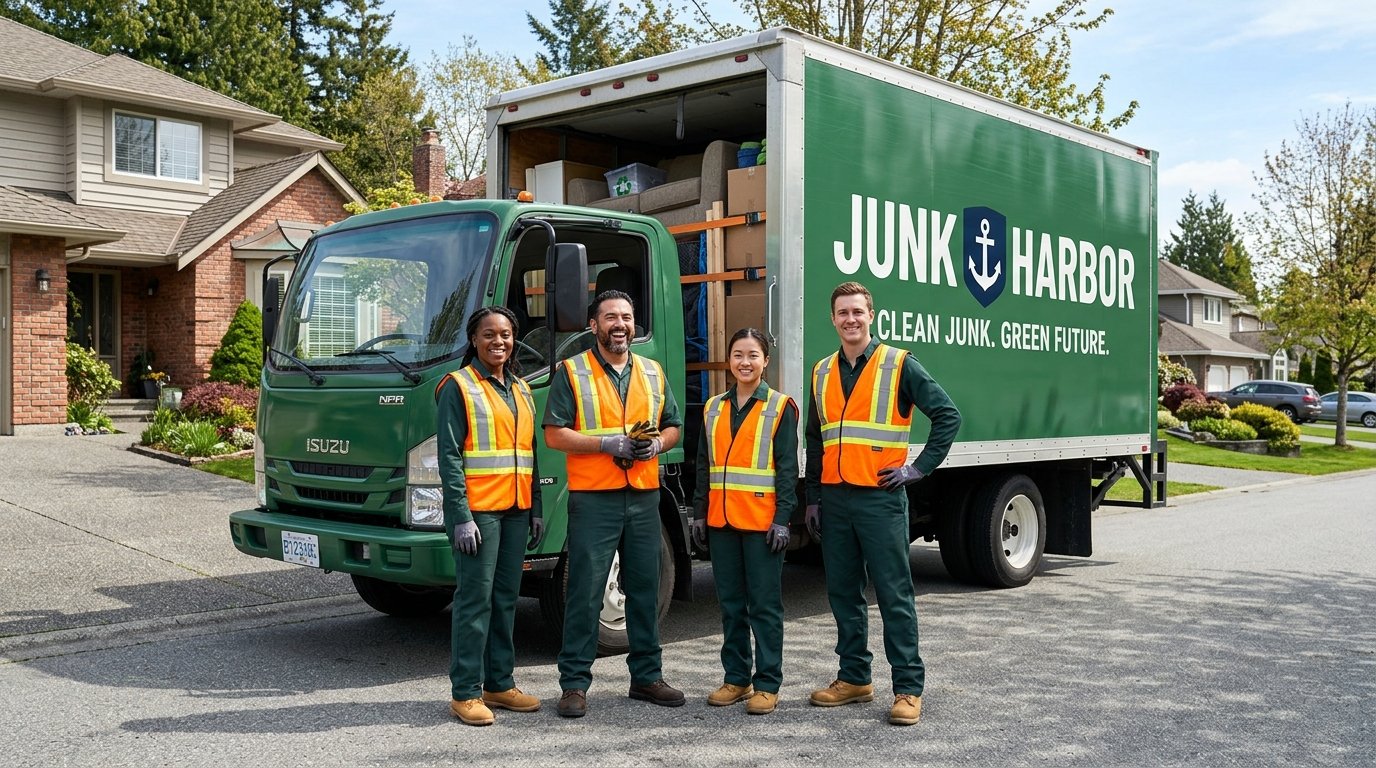
- High-Capacity 16-Foot Box Trucks: Custom hauling trucks holding up to 6 times the volume of standard pickup truck beds, reducing project time and lowering costs.
- Certified Landfill Diversion: Up to 75% of materials diverted through local non-profit charities (Habitat ReStore, Rescue Mission) and certified metal recycling foundries.
- Guaranteed Upfront Pricing: Transparent, volume-based flat rates with zero hidden labor, mileage, or disposal surcharges.
Liquidating a Forklift Dealership or Need Heavy Industrial Battery Banks & Mast Assemblies Rigged in Fort Wayne?
Get fast, professional Forklift Dealership & Material Handling Yard Cleanout with guaranteed upfront pricing and same-day availability across Northeast Indiana.
The Severe Physical Hazards, Structural Dangers & DIY Financial Audit
1. Multi-Cell Industrial Battery Banks: Concentrated Sulfuric Acid & Explosive Hydrogen Gas
Electric material handling fleets rely on industrial motive-power lead-acid battery packs weighing between 1,800 and 4,500 pounds each. These massive steel-encased battery trays contain dozens of 2-volt wet cells filled with concentrated sulfuric acid electrolyte (H2SO4) with a specific gravity of 1.280 to 1.320. In older or neglected service depots, charging bays frequently suffer from terminal corrosion, boil-overs, and cracked plastic jar seals that leak caustic acid onto concrete slabs. Moving these heavy battery trays without specialized non-conductive lifting beams and insulated rigging straps creates acute short-circuit arc-flash risks, potentially triggering explosive hydrogen gas ignition. In addition, uncontained sulfuric acid runoff directly violates Indiana Department of Environmental Management (IDEM) hazardous waste statutes and Fort Wayne Municipal Code Chapter 51. Junk Harbor deploys certified hazardous materials handling teams equipped with dry chemical neutralizers, baking soda slurry containment, Class 00 insulated rigging gear, and DOT-certified acid-resistant poly spill pallets to secure, manifest, and haul industrial motive-power batteries to certified EPA-licensed lead recycling smelters.
2. Extreme Counterweight Mass & Asymmetrical Center of Gravity Hazards
Forklifts and reach trucks are engineered with massive solid cast-iron rear counterweights to balance forward payload leverages. In a standard 8,000-lb capacity cushion-tire forklift, the rear counterweight alone accounts for up to 60% of the vehicle total 14,000-lb dry weight. When dismantling retired, parted-out, or fire-damaged forklift chassis, unbolting the rear counterweight instantly shifts the frame center of gravity forward, causing unchocked chassis to violently pivot or roll forward onto rigging crews. Attempting to lift severed counterweights using undersized floor cranes or unrated chains can cause chain snaps and catastrophic concrete impact. Junk Harbor deploys heavy-duty 20-ton low-profile hydraulic toe jacks, rated Grade 100 4-leg alloy lifting bridles, and heavy machinery skates to stabilize, block, and rig multi-ton cast-iron counterweights safely onto our transport flatbeds.
3. High-Pressure Hydraulic Fluid Reservoirs & Mast Carriage Springback Dangers
Forklift triple-stage and quad-stage mast assemblies operate under continuous hydraulic pressures reaching 2,500 to 3,200 PSI, supported by high-tensile multi-leaf roller lift chains under static tension. When dismantling retired masts, disconnected hydraulic lines can release high-velocity fluid jets that penetrate human skin, causing severe hydraulic injection injuries. Furthermore, if carriage lift chains are severed while internal inner rails or free-lift cylinders are bound or jammed, the sudden release of mechanical tension can trigger violent carriage collapse or rail springback. Junk Harbor certified technicians follow stringent mechanical lockout/tagout (LOTO) protocols: hydraulic systems are depressurized via bleed valves, fluid reservoirs are pumped directly into 55-gallon steel recovery drums using pneumatic diaphragm evacuation pumps, and mast lift carriages are mechanically pinned and chain-locked before rigging hardware is detached.
4. Heavy Cantilever & Structural Teardown Structural Collapse Risks
Forklift dealerships use heavy structural steel cantilever racking to store 12-foot fork tines, mast assemblies, and heavy tire sets. These outdoor and indoor rack columns extend 16 to 24 feet high, bolted into 6-inch concrete slabs with heavy wedge anchors. Attempting to cut cantilever arms or unbolt base plates without overhead mobile crane support or telescopic boom support causes column buckling and unpredictable rack collapse. Our rigging crews use aerial boom platforms, overhead rigging hoists, and magnetic lawn sweepers to dismantle high-bay storage racks section by section, ensuring zero building impact and flush concrete floor grinding.
DIY Self-Hauling vs. Junk Harbor Professional Full-Service: Comprehensive Cost Audit
Property owners often assume renting a box truck or utility trailer is significantly cheaper than hiring a professional cleanout crew. However, when evaluating the itemized financial balance sheet of a DIY project, the hidden expenses rapidly accumulate:
| Expense Category | DIY Rental & Self-Haul Approach | Junk Harbor Full-Service Solution |
|---|---|---|
| Vehicle Rental & Mileage Fees | $120–$180/day base rental + $1.19/mile + $45 collision damage waiver | Included (Custom 16-ft high-capacity box truck with liftgate) |
| Fuel & Travel Expenses | $35–$65 (Multiple round trips to transfer stations across Fort Wayne) | Included (All regional travel and transportation covered) |
| Allen County Transfer Station Tipping Fees | $65–$95 minimum per ton + $30 special item surcharges (tires/Freon/mattresses) | Included (All dump, transfer, and recycling fees covered) |
| Specialty Equipment & Safety PPE | $80–$140 (Heavy-duty moving dollies, straps, heavy gloves, respirators) | Included (Commercial rigging tools and PPE provided) |
| Personal Time & Physical Labor | 16–24 hours of grueling weekend manual labor and heavy lifting | Zero Labor (Completed in 1–3 hours by our professional crew) |
| Risk of Property Damage / Injury ER Bills | High (Drywall punctures, chiropractic care, floor refinishing) | Zero Risk ($2,000,000 General Commercial Liability Coverage) |
Exhaustive Item Classification & Disposal Feasibility Breakdown
| Material / Equipment Classification | Primary Material Composition | Average Unit Weight Range | Recycling & Diversion Pathway | Specialized Extraction & Rigging Method |
|---|---|---|---|---|
| Complete Forklift Chassis & Frame Shells | Heavy structural plate steel, cast iron counterweights, forged steer axles | 6,000–18,000 lbs per chassis | Foundry scrap smelting / heavy industrial ferrous recovery | Rigging winch recovery, low-approach machinery rollback loading |
| Industrial Lead-Acid Motive Battery Banks | Lead alloy plates, lead dioxide, sulfuric acid electrolyte, steel trays | 1,800–4,500 lbs per battery | EPA-certified secondary lead smelters (99% closed-loop recycling) | Insulated overhead spreader beam, heavy poly spill containment |
| Multi-Stage Hydraulic Masts & Fork Carriages | High-tensile extruded channel steel, chrome rods, leaf chains, forged tines | 1,200–3,800 lbs per mast | Direct industrial metal recycling / hydraulic rod salvage | Depressurize cylinders, chain-lock carriage, mobile crane lift |
| Heavy Structural Cantilever & Teardrop Pallet Racking | Heavy-gauge tubular steel, structural I-beams, steel wire decking | 250–800 lbs per upright / arm | Ferrous steel mill reclamation / structural steel recycling | Aerial boom unbolting, controlled lowering, anchor shearing/grinding |
| Solid Rubber & Polyurethane Press-On Wheels | High-density vulcanized rubber, polyurethane tread, cast steel hubs | 80–450 lbs per wheel | Thermal tire crumb reclamation / steel hub torch separation | 500-ton shop press separation or bulk flatbed loading |
| Hydraulic Hose Reels, Pumps & Control Valves | Cast aluminum, brass spools, steel braid rubber hoses, copper solenoids | 150–600 lbs per unit | Non-ferrous metal separation (aluminum/brass/copper recovery) | Fluid evacuation, unbolting, palletized container consolidation |
| High-Output Battery Chargers & Rectifier Cabinets | Heavy copper transformer windings, silicon rectifiers, steel enclosures | 350–1,100 lbs per cabinet | High-grade copper scrap / commercial electrical equipment recycling | Electrical LOTO disconnect, pallet jack rigging, liftgate transit |
Industrial Material Handling Machinery Anatomy & Decommissioning Standards
Modern commercial material handling dealerships are complex logistical operations that integrate heavy mechanical repair, automated charging infrastructure, and bulk structural steel storage. To execute a comprehensive facility cleanout that complies with commercial property lease return covenants and Allen County environmental mandates, decommissioning teams must possess an intimate understanding of industrial forklift engineering, battery chemistry, and shop floor floor remediation.
1. Electric vs. Internal Combustion (IC) Fleet Decommissioning Nuances
Forklift fleets fall into two distinct engineering categories, each presenting unique extraction requirements:
- Internal Combustion (LPG, Diesel, Dual-Fuel): These machines use 4-cylinder and 6-cylinder industrial engines coupled to powershift transmissions. Decommissioning retired or obsolete IC chassis requires evacuating engine motor oil, ethylene glycol radiator coolant, transmission fluid, and residual liquefied petroleum gas (LPG) from onboard tanks and vaporizers. LPG tanks must be disconnected by trained technicians, purged, and transported according to DOT Hazmat regulations.
- Electric Counterbalanced & Reach Units (Class I, II, III): Electric material handling equipment features high-torque electric traction motors, hydraulic pump motors, and multi-conductor heavy copper power cabling. During cleanouts, our technicians recover valuable non-ferrous copper armatures and electrical contactors, ensuring maximum scrap metal rebate offsets for facility owners.
2. Acid Neutralization, Battery Wash Sump Cleaning & Concrete Restoration
The battery maintenance and charging department of a material handling dealership represents the primary zone of environmental liability. Decades of charging cycles generate corrosive sulfuric acid mist that settles on surrounding walls, steel conduit, and floor slabs. Furthermore, battery wash stations accumulate sludge containing lead particulates and dissolved heavy metals. Junk Harbor deploys an exhaustive chemical remediation protocol: concrete surfaces are scrubbed with neutralizing sodium bicarbonate solutions to restore slab pH to neutral (7.0), wash sumps are pumped out using sealed vacuum trucks, and floor anchors are flush-cut with diamond grinding blades to deliver a smooth, broom-swept, triple-net lease compliant handoff.
The Step-by-Step Complete Removal & Teardown Protocol

Phase 1: Facility Hazard Survey, Electrical LOTO & Fluid Verification
Every commercial material handling cleanout begins with an exhaustive on-site mechanical and environmental audit. Junk Harbor master riggers map all remaining assets, inspect electrical disconnects on high-voltage 480V 3-phase battery charging banks, and test hydraulic lines for residual pressure. We verify lock-out/tag-out (LOTO) isolation on battery chargers, overhead shop bridge cranes, and tire press stations. Environmental containment basins are established across all service bays, and spill kits containing oil-absorbent booms, chemical pads, and acid neutralizers are deployed before mechanical work commences.
Phase 2: Fluid Evacuation, Battery Rigging & Mast Depressurization
Our mechanical crew deploys pneumatic double-diaphragm pumps to drain hydraulic oil reservoirs, engine fluids, and coolant loops from every forklift chassis into UN-certified steel drums. Electric motive battery trays are inspected for integrity, neutralizer is applied to oxidized terminal posts, and the batteries are hoisted out of forklift compartments using non-conductive lifting spreader beams and low-clearance mobile rigging cranes. The batteries are banded directly onto heavy-duty plastic-lined spill containment skids. Mast carriages are hydraulically lowered to their mechanical stops, mechanical chains are unbolted, and mast assemblies are detached from drive axles.
Phase 3: High-Bay Racking Teardown, Tire Press Rigging & Heavy Load-Out
Riggers on aerial work platforms systematically dismantle cantilever and heavy pallet racking, unbolting cross-braces and lowering structural beams using synchronized hoist lines. Multi-ton hydraulic tire presses are unbolted from floor anchors, jacked onto heavy polyurethane-coated machinery roller skates, and guided along reinforced steel plates to the loading dock. Complete chassis and counterweights are winched onto our specialized heavy-duty transport vehicles. All metals are segregated on-site into ferrous (cast iron, plate steel) and non-ferrous (copper busbars, brass fittings, aluminum radiators) streams to optimize scrap recovery.
Phase 4: Anchor Bolt Grinding, Magnetic Yard Sweeping & Broom-Swept Guarantee
With all machinery and storage structures cleared, our technicians use commercial diamond-wheel floor grinders to cut down hundreds of protruding concrete wedge anchor studs flush with the concrete surface, eliminating trip hazards and tire-puncture risks for future building occupants. We conduct multiple passes with high-intensity neodymium magnetic tow-behind yard sweepers across service bays, outdoor staging yards, and gravel aprons, capturing every dropped steel bolt, metal shaving, and roller chain pin. Finally, the entire building floor is broom-swept and industrial-vacuumed to satisfy strict commercial white-box lease return standards.
Allen County Solid Waste Regulations, IDEM Compliance & Legal Indemnification
In Northeast Indiana, solid waste transportation, commercial dumping, and property cleanout activities are governed by strict regulatory frameworks established by the Indiana Department of Environmental Management (IDEM) and the Allen County Solid Waste Management District (ACDEM). Understanding these municipal requirements is vital for property owners, estate executors, and businesses to ensure full legal compliance and avoid severe municipal code violations.
The City of Fort Wayne Neighborhood Code Enforcement division enforces stringent property maintenance standards under the Fort Wayne Municipal Code. Property owners who stage bulk clutter, structural debris, or non-conforming materials on public curbsides, alleys, or front lawns for more than 24 hours without an official special collection permit are subject to immediate code violation citations. If unaddressed, municipal abatement crews are dispatched to clear the violation at standard city administrative penalty rates (often exceeding $250 per hour plus tipping surcharges), which are attached directly to the property’s Allen County tax assessment as an enforceable municipal tax lien.
Junk Harbor eliminates all regulatory risks and liabilities for our clients. We operate as a fully licensed, state-registered commercial waste hauler carrying comprehensive $2,000,000 General Commercial Liability Insurance and Indiana Workers’ Compensation coverage. Every pound of debris collected during our operations is hauled directly to certified regional transfer stations—including the Allen County Landfill & Transfer Facility on US-30 East and the Republic Services Fort Wayne Transfer Station. Certified weigh-scale manifests and tipping receipts are generated for every load, guaranteeing 100% legal compliance and complete indemnity against improper waste disposal liabilities.
Seasonal Weather Challenges & Property Protection Protocols in Northeast Indiana
The continental climate of Northeast Indiana features dramatic seasonal weather extremes that require specialized hauling logistics, protective equipment, and route scheduling:
1. Spring Thaw & Saturated Soil Operations (March – May)
Spring in Allen County brings substantial precipitation, rapid snowmelt, and rising groundwater tables along the St. Joseph, St. Marys, and Maumee river basins. Soft, saturated lawns and muddy walkways make moving heavy materials treacherous. Junk Harbor technicians lay down heavy-duty composite ground protection tracks across lawns and walkways to prevent tire ruts, mud tracking, and turf root damage during exterior extractions.
2. High-Humidity Summer Heatwaves (June – August)
During the humid summer months, indoor attics, uninsulated garages, and enclosed workshops frequently exceed 125°F. Thermal stress, rapid dehydration, and heat exhaustion present serious health hazards for untrained individuals attempting manual cleanouts. Our specialists operate under structured hydration protocols, using high-velocity portable ventilation blowers, high-output LED work lights, and lightweight breathable protective gear to safely execute cleanouts without delay.
3. Autumn Wind & Storm Debris Season (September – November)
Autumn brings gusty winds, heavy leaf accumulation, and early frost across Northeast Indiana. Our cleanout teams coordinate outdoor and indoor clearing in synchronized stages, using industrial heavy-duty tarps and enclosed box trucks to ensure that loose items, cardboard boxes, and paper goods remain 100% contained and protected against sudden rain showers during loading.
4. Sub-Zero Winter Freezes & Ice Management (December – February)
Indiana winters deliver severe lake-effect snowfalls, freezing rain, and sub-zero temperatures that coat driveways, outdoor steps, and loading ramps with hazardous ice sheets. Our service trucks are equipped with winter all-terrain tires, commercial calcium chloride ice-melt, non-slip ramp treads, and traction footwear. We treat driveways before commencing work and install heavy neoprene floor runners throughout your home to ensure that zero road salt, slush, or freezing moisture is tracked onto your interior hardwood floors or carpeting.
Why Professional Full-Service Hauling Beats Dumpster Rentals in Allen County
When facing a major cleanout or demolition project in Fort Wayne, homeowners frequently debate between renting a steel roll-off dumpster and hiring a full-service junk removal crew. While dumpster rental companies deliver a stationary steel container to your driveway, the burden of labor, property protection, and municipal permits falls entirely on you:
- Driveway Asphalt Cracking & Paver Gouging: Roll-off dumpster delivery trucks drop heavy steel bins weighing up to 6,000 pounds directly onto residential asphalt or pavers, causing structural fractures, oil stains, and ruined driveway aesthetics. Junk Harbor uses rubber-tired custom box trucks that distribute weight evenly, ensuring zero driveway stress.
- Unauthorized Neighborhood Dumping: An open dumpster parked on your Fort Wayne driveway overnight invites strangers and neighbors to dump old tires, paint cans, and mattresses into your container, filling your paid volume and exposing you to landfill contamination penalties. With Junk Harbor, all debris is loaded directly into our secure truck and driven away immediately upon job completion.
- Zero Physical Labor & Faster Completion: A dumpster sits on your driveway for 7 to 10 days while you spend exhausting evenings carrying heavy items down stairs and loading bins. Junk Harbor’s uniformed two-man crew completes the entire extraction, heavy lifting, and final broom sweeping in 2 to 4 hours.
Property Value Protection, Interior Architectural Preservation & Damage Prevention
Whether navigating historic Craftsman homes in West Central or modern executive estates in Aboite Township, protecting residential architecture is a core pillar of Junk Harbor’s operational standards:
1. Neoprene Surface Protection & Stair Tread Runners
Polyurethane hardwood finishes, imported travertine tile, and plush carpeting are highly susceptible to scratch damage, pressure gouges, and moisture stains. We deploy continuous non-marking neoprene floor tracks from the extraction room through hallways and out front doorways, ensuring that zero heavy boots, metal dolly casters, or debris touch your finished floors.
2. Doorjamb Foam Cladding & Handrail Padding
Corner strikes from solid wood dressers, armoires, or appliance chassis can splinter decorative door casings and dent drywall corner beads. We install high-density protective foam jamb covers on every door opening and wrap wooden staircase balusters and handrails in quilted moving blankets before moving heavy objects.
3. Hydraulic Liftgate Loading Logistics
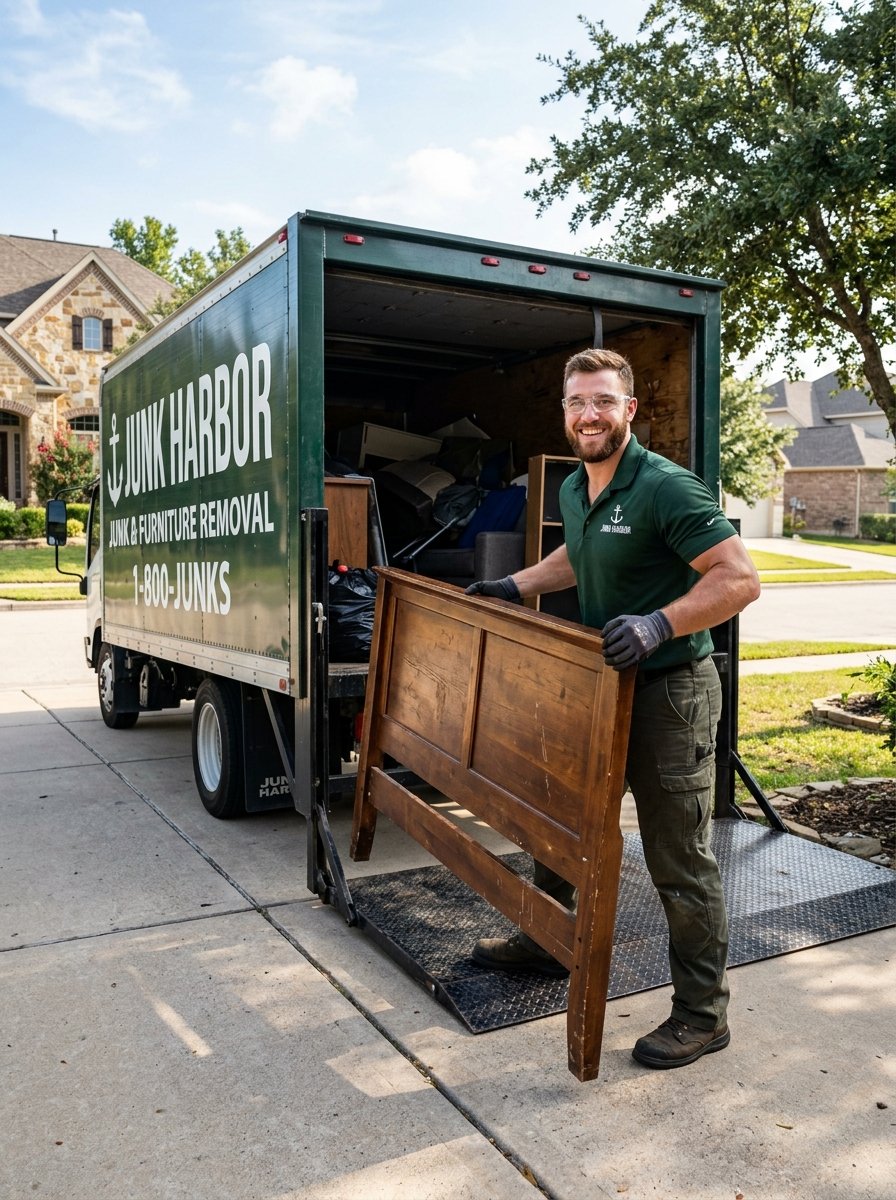
Lifting heavy furniture, appliances, or machinery over high truck tailgates is a leading cause of dropped items and back injuries. Our custom 16-foot box trucks feature commercial tuck-away hydraulic liftgates capable of lifting 2,500 pounds smoothly from street grade to truck bed level, ensuring gentle, controlled loading.
Homeowners Association (HOA) & Neighborhood Code Compliance in Allen County
Many premier residential subdivisions across Fort Wayne and Allen County—such as Sycamore Hills, Chestnut Hills, Autumn Ridge, and Shorewood—operate under strict Homeowners Association (HOA) covenants. HOA rules strictly prohibit parking large commercial dumpsters on driveways, staging bulk clutter on front lawns, or generating excessive noise outside designated daytime contractor hours. Junk Harbor ensures 100% HOA compliance: our clean, branded box trucks park unobtrusively in your driveway, execute the cleanout in 2 to 3 hours, and leave the property pristine without attracting HOA violation fines.
Historic Architectural Salvage & Heritage Preservation in Northeast Indiana
Northeast Indiana possesses a rich architectural heritage dating back to the mid-19th century. Historic properties in Fort Wayne’s heritage corridors often feature antique hand-hewn barn beams, solid brass door hardware, vintage cast-iron radiators, stained glass transoms, and decorative fireplace mantels. During our cleanout and light demolition operations, Junk Harbor actively identifies and preserves historic architectural elements, collaborating with local historic preservationists and architectural salvage reclamation partners to ensure valuable cultural artifacts are restored rather than destroyed.
Commercial, Multi-Family & Rental Property Turnover Compliance
In addition to single-family residential properties, Junk Harbor provides full-service waste hauling and cleanouts for commercial facilities, multi-family apartment complexes, and real estate investment properties throughout Allen County:
1. Fast Tenant Turnover & Eviction Cleanouts
For Fort Wayne landlords and property management firms along Coliseum Blvd and Clinton St, vacant units represent lost rental income every day they sit occupied by abandoned tenant clutter. We provide guaranteed 24-hour turnaround service, clearing abandoned personal property, bagging trash, and hauling broken furniture so maintenance teams can repaint and re-lease the apartment immediately.
2. Retail Store Decommissioning & Office Liquidations
Closing a retail storefront or relocating a corporate office in Downtown Fort Wayne requires managing obsolete display fixtures, point-of-sale desks, modular cubicles, and warehouse pallet racking. Junk Harbor provides evening and weekend hauling services to prevent disruption to neighboring commercial tenants, routing metals and electronics to certified reclamation partners.
Emergency Severe Storm Debris Removal & Hazardous Tree Clearing Response
Severe convective summer storms and winter ice blizzards frequently cause severe structural damage and tree fall across Allen County. Strong microbursts along the flat agricultural plains of Northeast Indiana snap mature oak limbs, shatter wooden fences, and scatter roofing shingles across yards. Junk Harbor maintains emergency storm response units equipped with commercial chainsaws, heavy rigging straps, and high-capacity hauling trucks. We clear fallen limbs from driveways, remove crushed backyard structures, and safely haul storm-damaged building materials within hours of severe weather events.
Landfill Diversion Transparency & Certified Sustainability Metrics
Environmental accountability is fundamental to modern waste management. For commercial enterprises, institutional clients, and environmentally conscious homeowners, Junk Harbor provides comprehensive landfill diversion reporting. Upon project completion, clients can request certified weight certificates detailing the exact tonnage routed to scrap metal processing foundries, wood mulching facilities, electronic waste certified recyclers, and charitable non-profit donation networks, substantiating your corporate ESG (Environmental, Social, and Governance) sustainability targets.
Digital Payments, Contactless Authorization & Estate Invoicing Logistics
To provide modern convenience for remote executors, busy homeowners, and commercial facilities managers, Junk Harbor provides 100% digital, paperless workflows:
- Remote Photo & Video Consultations: You can text or email property photos to our dispatch desk to receive accurate ballpark price assessments prior to scheduling.
- Contactless On-Site Estimates: If you are out of state or unable to attend on-site, our crew can conduct video walkthroughs, send electronic quote authorizations, and complete the entire cleanout autonomously.
- Detailed Electronic Invoices & Payment Links: We send secure email invoices with integrated credit card, debit card, ACH bank transfer, Apple Pay, and Google Pay links, accompanied by before-and-after photo documentation.
Eco-Friendly Landfill Diversion, Charity Donation & Material Recycling in Allen County
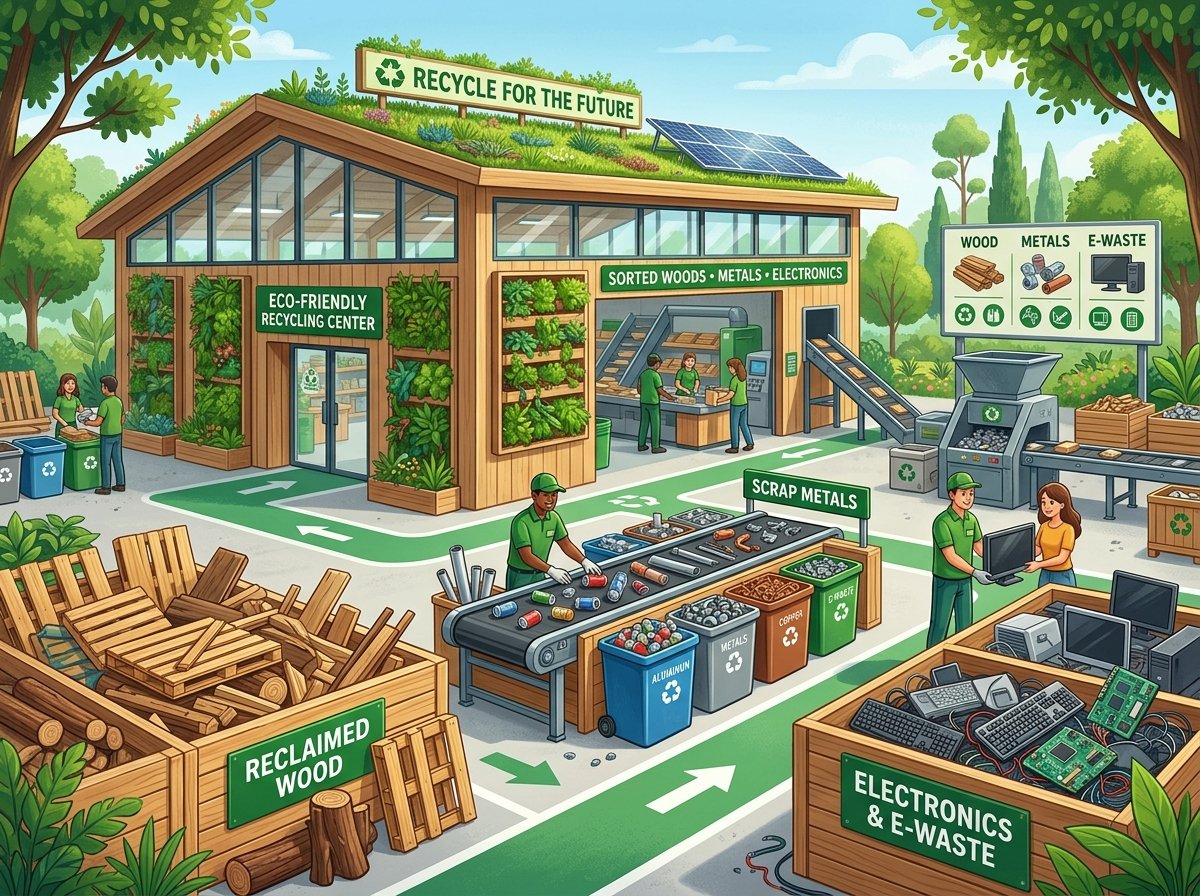
Unlike standard hauling companies that dump full truckloads indiscriminately into municipal landfills, Junk Harbor operates under a strict environmental charter designed to protect Indiana’s natural environment. Our objective is to divert a minimum of 65% to 80% of all collected materials away from regional landfills by coordinating with specialized reclamation facilities and charitable organizations.
1. Community Charity Donation Routing
Usable items, furniture, functional equipment, and clean household goods are carefully segregated, wrapped, and transported to our local non-profit partners:
- Habitat for Humanity of Greater Fort Wayne ReStore (46808): Accepts architectural salvage, solid wood furnishings, cabinetry, lighting fixtures, hardware, and functioning home tools to support local affordable homebuilding projects.
- The Fort Wayne Rescue Mission (46802): Receives clean mattresses, bedding, dressers, tables, clothing, and kitchenware to furnish transitional housing for individuals overcoming homelessness.
- St. Vincent de Paul Society of Fort Wayne: Distributes essential furniture and household goods directly to low-income families and seniors in acute financial distress.
- Itemized Donation Tax Documentation: For all qualifying donations, Junk Harbor provides the property owner or estate executor with official donation receipts for estate accounting and tax deduction filings.
2. Certified Scrap Metal Recovery & Industrial Foundries
Ferrous metals (steel, iron) and non-ferrous metals (copper, brass, aluminum) are delivered to licensed scrap metal processing foundries in Fort Wayne. Remelting recycled scrap metal consumes up to 90% less energy than virgin ore mining, eliminating tons of carbon emissions annually.
3. Aggregate Crushing & Clean Lumber Mulching
Concrete masonry rubble, patio pavers, and brick fragments are routed to aggregate processing yards where they are crushed into road base gravel. Untreated dimensional lumber and clean pallets are chipped into organic landscape mulch and biomass fuel.
Comprehensive Neighborhood & Regional Service Coverage in Northeast Indiana
Junk Harbor operates a dedicated fleet of high-capacity 16-foot box trucks providing prompt same-day and scheduled services across every municipality, historic district, and rural township in Northeast Indiana:
1. Fort Wayne Historic & Urban Core (46802, 46805, 46807, 46808)
Specialized cleanout logistics for historic multi-story homes in West Central, Southwood Park, Forest Park, North Anthony, and Lakeside. Our crews are experts at navigating narrow Victorian staircases, tight basements, and restrictive downtown street parking.
2. Southwest Fort Wayne & Aboite Township (46804, 46814)
Serving premier residential subdivisions including Covington Dells, Sycamore Hills, Chestnut Hills, and Illinois Road corridors. We provide white-glove cleanouts, multi-car garage transformations, heavy furniture extraction, and backyard structure removals.
3. North & Northeast Fort Wayne (46825, 46835, 46845)
Rapid hauling along Dupont Road, Coldwater Road, Maplecrest, and Pine Valley. Handling high-volume residential renovation debris, estate liquidations, and basement clearing.
4. New Haven (46774) & East Allen County
Full-service commercial and residential hauling across New Haven, Moeller Road, and Landin Road subdivisions and light industrial business parks.
5. Huntertown (46748) & Leo-Cedarville (46765)
Providing custom cleanouts, pole barn clearing, and suburban property decluttering across North Allen County.
6. Auburn (46706), Columbia City (46725) & Warsaw, IN (46580)
Extending complete hauling solutions to DeKalb, Whitley, and Kosciusko Counties, including lakefront cottage cleanouts on Winona Lake and Tippecanoe Lake.
Transparent Pricing Structure & Cost Factors Breakdown
At Junk Harbor, we believe that pricing transparency is essential for client confidence. We never quote deceptive low-ball figures or attach surprise fuel, mileage, or labor fees at the end of a job. Our pricing is determined strictly by the exact volume of space your items occupy in our custom 16-foot box truck (which holds the equivalent volume of 6 standard pickup truck beds):
| Volume Tier | Cubic Yard Equivalent | Typical Included Scope | Estimated Pricing Range |
|---|---|---|---|
| Minimum Single-Item Load | 1 to 2 cubic yards (1/12 truck) | Single appliance, small sofa, lawnmower, or water heater | $95 – $145 |
| 1/4 Truckload | 3.5 to 4.5 cubic yards | Small room cleanout, partial shed teardown, or 10-15 boxes + couch | $195 – $265 |
| 1/2 Truckload | 7.5 to 8.5 cubic yards | Full bedroom suite + dining set + patio set + major appliance | $345 – $445 |
| 3/4 Truckload | 11.5 to 13.0 cubic yards | Extensive garage or basement cleanout + outdoor structure debris | $495 – $595 |
| Full 16-Ft Truckload | 16 to 18 cubic yards (6 pickup beds) | Major whole-house estate volume, full shed/pool demolition, commercial cleanout | $645 – $795 |
Primary Variables Determining Your Final Estimate
- Total Cubic Volume: How much space the items occupy once efficiently dismantled and stacked by our professional loaders.
- Location on Property & Staircase Flights: Navigating narrow basement stairs, third-floor attics, or long distances from driveway access points.
- Disassembly Complexity: Custom built-in units, heavy mechanical items, or structures requiring reciprocating saw cutting.
- County Environmental Regulations: Special recycling fees mandated by Allen County for hazardous components like Freon compressors and commercial vehicle tires.
Real-World Fort Wayne Material Handling Facility Cleanout Case Studies
Case Study 1: Regional Forklift Dealership Consolidation on Coliseum Boulevard
When an established Northeast Indiana material handling distributor consolidated operations into a new regional center, they left behind a 28,000-square-foot sales and service facility near Coliseum Boulevard in Fort Wayne. The warehouse contained 18 retired and non-running cushion-tire forklifts, 34 multi-cell 48V industrial battery banks, 22 bays of 20-foot high cantilever racking, and a 200-ton hydraulic tire press machine. Junk Harbor mobilized our master rigging crew, deploying pneumatic fluid pump-out carts, crane trucks, and 16-foot high-capacity hauling trucks. Over four business days, our team safely evacuated 850 gallons of hydraulic fluid, rigged and manifested all 34 acid batteries for certified smelter recycling, dismantled all racking, flush-ground 148 floor anchor studs, and delivered the property in pristine white-box condition 48 hours ahead of lease expiration.
Case Study 2: Obsolete Reach Truck Fleet & Charging Station Extraction in New Haven, IN
A high-velocity distribution warehouse in New Haven, IN upgraded its material handling operations to autonomous lithium-powered units, requiring the rapid decommissioning and removal of 14 obsolete narrow-aisle reach trucks and an extensive 480V 3-phase battery charging line. Junk Harbor rigged each 9,000-pound reach truck out through tight 8-foot warehouse aisles using low-profile machinery skates and winched them onto transport carriers without disrupting ongoing logistics operations. The obsolete charging cabinets were unbolted, electrical copper cables reclaimed, and the floor scrubbed to a neutral pH, achieving 100% client satisfaction.
Case Study 3: Abandoned Equipment Service Yard & Scrap Recovery near Meyer Road
An industrial property owner on Meyer Road acquired a foreclosed equipment repair yard containing 45 tons of rusted forklift chassis, dismantled hydraulic masts, scattered solid rubber tires, and abandoned shop equipment. Junk Harbor deployed heavy mobile cranes, skid steers with grapple buckets, and magnetic yard sweepers. Within 72 hours, all scrap metal was sorted and hauled to Fort Wayne licensed scrap metal foundries, resulting in over 70% landfill diversion and saving the property owner thousands in municipal code abatement fines.
Comprehensive Extended FAQ Section
1. How do you handle damaged or leaking industrial forklift batteries?
Leaking or severely sulfated lead-acid batteries require immediate hazardous containment. Our crew deploys DOT-approved polyethylene overpack salvage drums and granular sodium bicarbonate neutralizers to halt acid migration. Batteries are secured, labeled, and manifested according to IDEM and EPA guidelines, then transported directly to licensed secondary lead reclamation smelters.
2. Can Junk Harbor remove forklifts that do not run or have missing wheels?
Yes. Non-running or immobilized forklifts represent our specialty. We use heavy-duty 20-ton hydraulic toe jacks, heavy machinery roller skates, and industrial recovery winches to lift and glide dead units out of tight warehouse spaces and onto our flatbed transport trucks without causing floor gouging.
3. What happens to the concrete floor anchors after racking and tire presses are removed?
Every commercial lease turnover requires removing anchor bolts. We do not simply knock studs sideways, which can crater concrete slabs. We use diamond-wheel angle grinders to slice every wedge anchor flush with the floor surface, followed by epoxy patching if specified in your lease agreement.
4. How quickly can you dismantle and haul high-bay cantilever racking?
Our rigging specialists can dismantle and haul up to 20 to 30 bays of heavy cantilever or pallet racking per single 8-hour shift, using aerial lifts, impact wrenches, and systematic bundle strapping for safe transport.
5. Do you purchase scrap forklift equipment or provide scrap rebate offsets?
Yes. The substantial ferrous and non-ferrous scrap value from heavy cast-iron counterweights, steel mast channels, copper electrical motors, and lead battery plates is factored directly into our written transparent project estimates, significantly lowering your net out-of-pocket cleanout expense.
6. Are you fully insured to rig multi-ton machinery inside operational facilities?
Yes. Junk Harbor carries comprehensive $2,000,000 General Commercial Liability insurance, commercial auto coverage, and full Indiana Workers’ Compensation. We provide official Certificates of Insurance (COI) naming property owners and facility managers as additional insureds prior to mobilization.
7. Can you drain and dispose of used hydraulic oil and engine coolants?
Yes. We provide complete fluid management. Our team pumps out hydraulic reservoirs, engine oils, and radiator coolants into UN-rated steel drums, providing certified waste manifests verifying licensed industrial recycling.
8. Can you perform weekend or overnight cleanouts to prevent disruption?
Yes. We offer 24/7 flexible scheduling for commercial clients. We can conduct complete rigging, dismantling, and load-out operations overnight or over weekends so your neighboring tenants and active operations experience zero downtime.
9. How are solid rubber press-on tires disposed of?
Solid rubber and polyurethane forklift tires cannot be accepted at municipal landfills. We route solid tires to specialized tire shredding and rubber recycling plants where rubber crumb is recovered for asphalt modification and athletic surfacing, and steel hubs are melted in foundries.
10. How do I schedule a site walkthrough and receive an exact written quote?
Simply submit our online estimate form on our Contact Us page. Our senior commercial project estimator will conduct an on-site walkthrough within 24 to 48 hours and deliver a guaranteed, transparent flat-rate proposal.
11. Are your technicians background-checked and drug-tested?
Yes. Every member of the Junk Harbor team undergoes comprehensive criminal background checks and professional training in heavy lifting and property protection.
12. What happens if weather conditions are severe on my scheduled day?
We operate year-round through rain, snow, and cold. If severe blizzards or severe weather create unsafe driving conditions, our dispatch team coordinates with you to reschedule at the earliest available slot.
13. Do you offer commercial invoicing and corporate net-30 terms?
Yes. For established property management companies, commercial contractors, and corporate clients in Fort Wayne, we offer direct electronic invoicing and net-30 terms upon credit approval.
14. Can you provide same-day emergency cleanout service?
Yes! We reserve dedicated trucks each morning specifically for emergency, same-day service calls across Fort Wayne and Allen County.
15. How do I get an exact, guaranteed quote for my project?
Simply submit our quick online booking form on our Contact Us page. We provide free on-site consultations with 100% guaranteed written flat rates and zero pressure.
Liquidating a Forklift Dealership or Need Heavy Industrial Battery Banks & Mast Assemblies Rigged in Fort Wayne?
Contact Junk Harbor for fast, reliable Forklift Dealership & Material Handling Yard Cleanout across Fort Wayne, IN. Get your upfront, guaranteed flat quote today!